In short: a bilateral social security agreement with Spain on healthcare does not give you care just because you hold a country's nationality. Each agreement covers specific categories (workers, family members, pension holders, temporary stays) and each text says which. In the texts we reviewed, the agreements with Morocco, Chile, Peru and Tunisia include healthcare. Peru's is the narrowest: emergency care only, during a temporary stay, and only for a national of the country where the person is. If you do not fit a category, the agreement does not cover you.
In person or by representative? The administrative agreements we reviewed ask you to present a certificate from your country's institution to the institution of the place of residence or stay, and do not say whether this is done in person or through a representative. Check with the provincial office of the INSS (Instituto Nacional de la Seguridad Social, the national social security institute) in your province.
What Spanish law says: Law 16/2003, art. 3.1 recognises, besides the right of people who live in Spain, that people entitled to healthcare under the EU coordination regulations or bilateral agreements that include this benefit have access to it if they reside in Spain or during temporary trips there. They get it in the form, extent and conditions set by each regulation or agreement. So what counts is the text of each agreement.
Agreements with healthcare that we checked in their text:
| Country | Agreement | Who gets healthcare under the text |
|---|---|---|
| Morocco | 1979 agreement | Workers who move to work and the family members accompanying them (art. 9). Workers on a temporary stay in their country of origin (art. 12). Workers receiving benefits who move with prior authorisation (art. 13). Family members living in the other Party (art. 15). Pension holders living in the other Party, and their family (art. 16). |
| Chile | 1997 agreement | Workers on a temporary stay in the other Party (art. 9). Workers posted by their employer (art. 10). Family members living in the other Party (art. 11). Pension holders (art. 12). |
| Peru | 2003 agreement | Emergency care only: workers and pensioners entitled to healthcare in one Party, during a temporary stay in the other, provided they are nationals of that latter Party (art. 9.1); the same for accompanying family members (art. 9.2). Example: a Peruvian national entitled in Spain who is temporarily in Peru is covered there; a Peruvian insured in Peru who is in Spain is not. |
| Tunisia | 2001 agreement | Workers on a stay in their home country (art. 9). Family members living in the other Party (art. 10). Transfer authorised in advance (art. 11). Pension holders (art. 12). |
The Chile and Tunisia agreements apply to workers who are nationals of either Party and to their family members (art. 3 of each); the Tunisia one also covers refugees and stateless people habitually resident in one of the Parties. The Morocco one applies to Spanish or Moroccan workers and their family members and survivors, and also to stateless people and refugees who meet the conditions of art. 3.2; who receives healthcare is set out in each article of the table. The Peru one has the nationality condition explained in its row.
Countries we leave out of the table. Brazil and Ecuador appear in older lists, but in the texts we reviewed we found no healthcare: the supplementary agreement with Brazil, in force since 1 March 2018, lists only pensions and work accidents, and the 2009 Ecuador agreement regulates cash benefits. We did not review the text for Andorra, Cape Verde, Senegal and the rest of the Social Security list of agreements, so we say nothing about them. Look up your country there.
Which document you get and where it goes (administrative agreements of each convention):
- Morocco (1984 agreement): a pension holder asks the institution that pays the pension for a certificate of entitlement to healthcare (art. 9.1). Family members register with a certificate from the competent institution of the country of affiliation (art. 8.1). For a temporary stay, a certificate is presented to the institution of the place of stay (art. 7.1).
- Peru (2007 agreement): on a temporary stay you present, to the institution of the place of stay, a certification on a form issued by the competent institution, which sets its validity period (art. 7.1). Remember that the agreement only covers someone who is a national of the country where the stay takes place.
- Tunisia (2004 agreement): certification of entitlement for stays and authorised treatment (art. 6), a certificate for family members living in the other Party (art. 7), and a certificate of entitlement for the pensioner and family, requested before moving (art. 8).
- Chile: we have not reviewed its administrative agreement. Ask the competent institution in your country which certificate it issues.
In Spain, the Morocco and Tunisia agreements name the INSS as liaison body (art. 2 in the Morocco one), and the Tunisia one names the INSS provincial offices as competent institutions (art. 3). For current forms for each country, open its page in the list of agreements. Care at the health centre and the health card are organised by your regional health service: see the health card guide.
If you live in Spain without legal residence. Law 16/2003, art. 3 ter gives publicly funded care if, among other conditions, you are not obliged to prove mandatory cover by another route (EU law, bilateral agreements and other rules) and you cannot export health cover from your country. RD 180/2026, art. 2.1 adds: if you come from a country with which Spain applies an international social security rule that includes health cover, you must provide a certificate from that country's competent health institution stating that exporting the health cover at its expense does not apply. The article lists no countries; if this may be you, get the certificate in your country before applying. The rest of the procedure is in our RD 180/2026 card.
What to do in your situation:
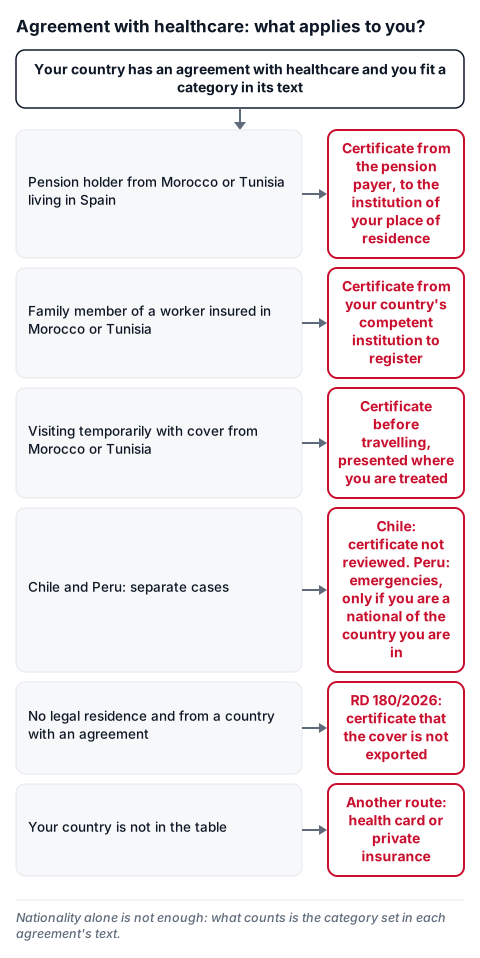
- Pension holder from Morocco or Tunisia living in Spain: ask the institution that pays your pension for the certificate of entitlement to healthcare and present it at the institution of your place of residence. In Spain the INSS is the liaison body in the agreements with Morocco and Tunisia: confirm at your provincial office where it is presented.
- Family member of a worker insured in Morocco or Tunisia: ask the competent institution of that country for the certificate to register in Spain.
- Visiting temporarily with cover from Morocco or Tunisia: get the certificate before you travel and present it where you are treated.
- Chile: we have not reviewed which certificate applies; ask the institution in your country. The agreement includes pension holders (art. 12), whether they receive a pension from both Parties or only one.
- Peru: the agreement covers emergency care on a temporary stay only, and only if you are a national of the country where you are. So if you are a Peruvian insured in Peru and visiting Spain, this agreement does not cover you.
- No legal residence and from a country with an agreement: also provide the certificate that the cover is not exported (RD 180/2026).
- Your country is not in the table: your route is different. See the health card guide or private health insurance.
Official sources: Social Security list of agreements, Law 16/2003, RD 180/2026 (BOE).
Informational only; check the official source and a professional for your specific case.